Your change plan is your best hypothesis
How much change budget goes into activities we never really find out whether they work? Treat change plans less like something to execute and more like something to test.

How much change budget goes into activities we never really find out whether they work?
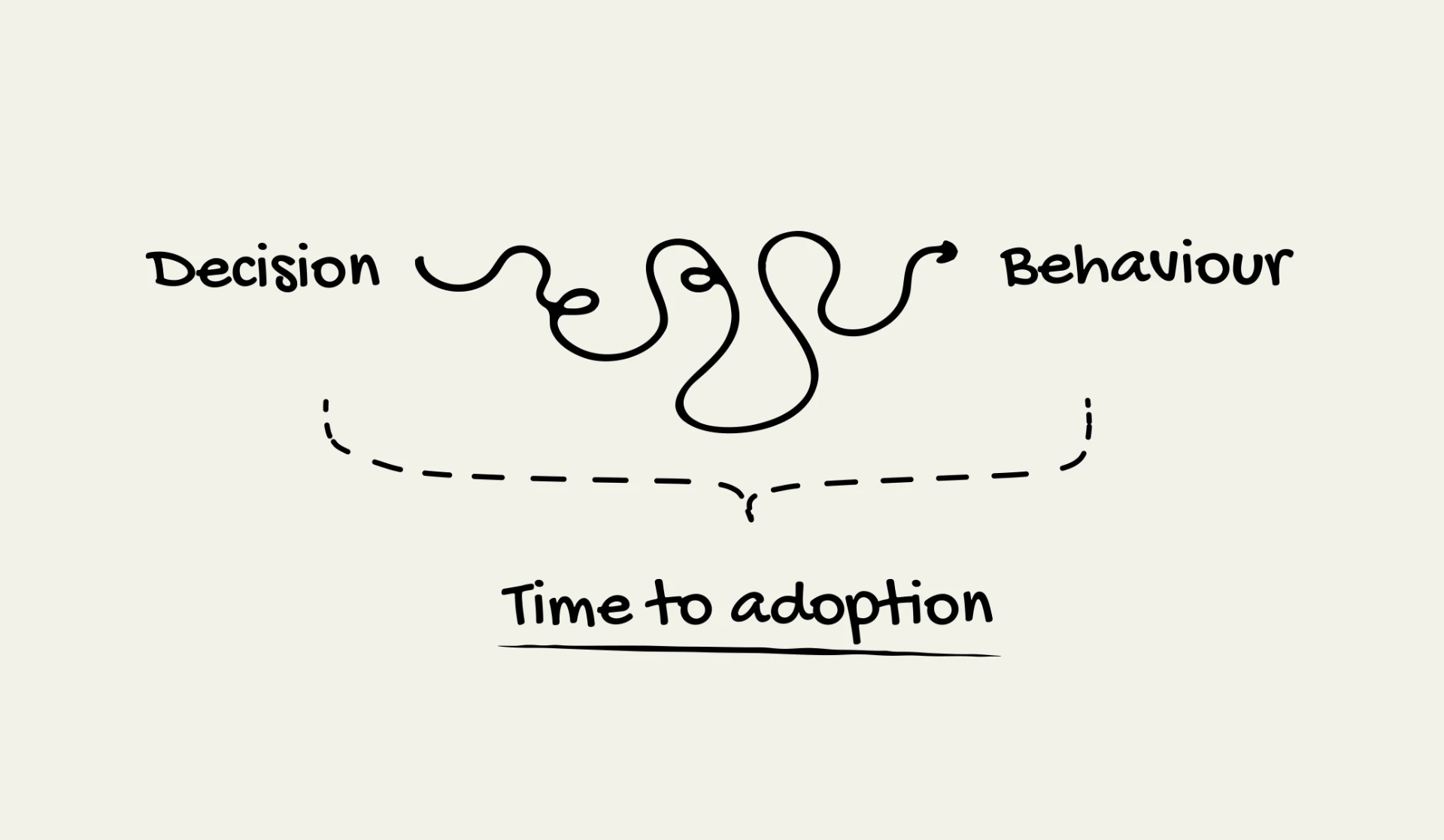
Organizations invest heavily in training, communications, workshops and other change interventions. But the important question is not whether those activities were delivered.
Did people start doing something differently? Did that behaviour contribute to the outcome we wanted? And did our interventions actually help make it happen?
This is why I believe we should treat change plans less like something to execute and more like something to test.
Every change initiative contains hypotheses
Behind almost every change initiative are two important assumptions, whether we make them explicit or not.
The first is a behaviour hypothesis: if a certain group starts doing something differently, we believe it will contribute to the business outcome we want to achieve.
The second is an intervention hypothesis: if we change a condition or introduce a particular intervention, we believe that desired behaviour will become more likely.
In simple terms:
- If people do X, we believe it will contribute to Y.
- If we do Z, we believe X will happen more often.
Once those assumptions are explicit, we can test them while the change is unfolding instead of waiting until the end to evaluate the result.
Is the behaviour changing? Are our interventions helping? Is the behaviour contributing to the outcome we care about? What should we change next?
That creates a very different rhythm for change:
Test → Measure → Understand → Adapt → Test again.
It is much closer to how good product development works: form a hypothesis, gather evidence, learn and improve.
Change should be able to work the same way.
When behaviour doesn't move, ask why
Measurement only becomes useful when it helps us decide what to do differently.
This is where behavioural science can help. One useful framework is COM-B, which suggests that behaviour depends on three broad conditions: capability, opportunity and motivation.
Capability asks whether people have the knowledge, skills and ability required to perform the behaviour.
Opportunity looks at whether the environment supports the behaviour: systems, processes, time, social norms, management support and other surrounding conditions.
Motivation considers whether people have sufficient reason, intention, belief or habit to perform the behaviour.
The distinction matters because different barriers require different interventions.
If capability is the issue, training may be exactly what is needed. If the problem is opportunity, another e-learning course is unlikely to solve it. The workflow, system, incentives or manager behaviour may need to change instead. And if motivation is the barrier, we need to understand why the new behaviour is not yet compelling enough to replace the old one.
The point is not to do more change activity. It is to choose interventions based on what is actually getting in the way.
This should change how we invest in change
A more hypothesis-driven approach gives decision makers earlier signals about which interventions are moving change adoption and which are not.
That means less time, money and organizational capacity spent on activities simply because they are in the plan — and more investment in what is actually creating movement.
At Shiftic, this is becoming a core principle in how we think about change adoption: connect the outcome to the behaviours required to achieve it, measure what happens, understand what is influencing those behaviours, and use what you learn to decide what to do next.
Your change plan is your best hypothesis.
The faster you can test it, learn and adapt, the better your chances of making the change happen.